Steel, Aluminum, or Specialty Alloy? A Decision-Maker's Guide to Choosing the Right Material for Your Fabrication Project
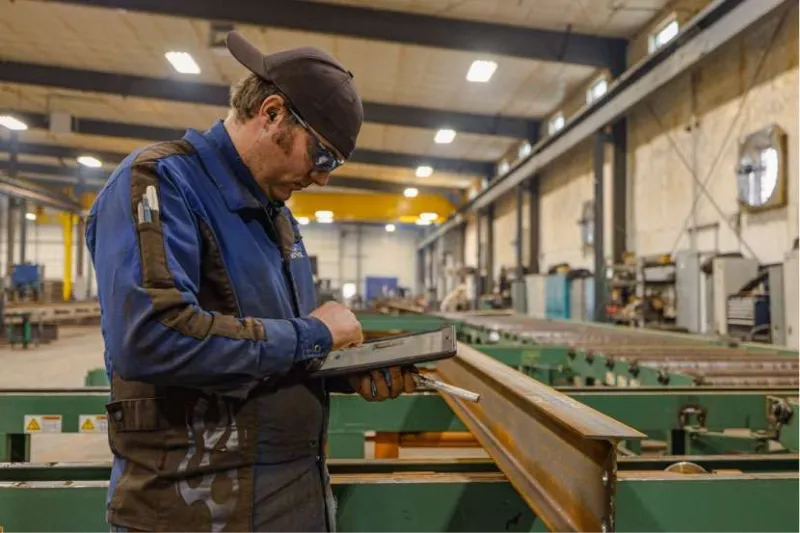
Photo: engineer examining steel aluminum metal samples in industrial fabrication facility, via utahsteel.com
Why Material Selection Deserves More Attention Than It Often Receives
In the lifecycle of a custom fabrication project, material selection is frequently treated as a preliminary checkbox rather than a consequential engineering decision. Specifications get carried forward from previous projects, or materials are chosen based on familiarity rather than fitness for purpose. The result, in many cases, is a fabricated component that performs adequately — but not optimally — and at a cost that could have been better managed with a more deliberate selection process.
The three primary material categories in industrial fabrication — carbon and structural steel, aluminum alloys, and specialty metals — each offer distinct performance profiles. Understanding those profiles, and matching them to the specific demands of a given application, is one of the most valuable contributions an engineer or procurement professional can make to a project's outcome.
This guide is intended to provide a structured framework for that decision.
Understanding the Performance Characteristics of Carbon and Structural Steel
Steel remains the foundational material of industrial fabrication, and for good reason. Its combination of strength, workability, weldability, and cost-effectiveness is difficult to replicate across a broad range of applications.
Mechanical Strength
Carbon steel is available in a wide range of strength grades. Mild steel (A36, for example) offers yield strengths in the range of 36,000 psi and is well-suited to structural applications where extreme strength is not required. High-strength low-alloy (HSLA) grades such as A572 Grade 50 deliver higher yield strength with only modest increases in cost, making them attractive for applications where weight reduction is a secondary goal. For demanding structural applications, quenched and tempered grades like A514 offer yield strengths exceeding 100,000 psi.
Weldability and Fabricability
Mild and low-alloy steels are among the most weldable materials available, compatible with a wide range of processes including SMAW, GMAW, FCAW, and SAW. This broad process compatibility makes steel the default choice for fabrication shops working across diverse project types. Forming, cutting, and machining operations are similarly well-established, with extensive tooling and process knowledge available in the domestic fabrication industry.
Cost Considerations
On a per-pound basis, carbon steel is generally the most economical structural material available. For large, heavy fabrications — structural frames, equipment bases, pressure vessels, and similar components — steel's cost advantage is often decisive. Commodity pricing does introduce variability, and tariff exposure on imported steel has added complexity in recent years, reinforcing the value of domestic sourcing.
Limitations
Steel's primary liability is its susceptibility to corrosion. Without protective coatings, plating, or the use of weathering steel grades, carbon steel will oxidize in the presence of moisture. This characteristic makes material selection — and surface treatment specification — critically important for outdoor, marine, or chemically aggressive environments.
The Case for Aluminum in Custom Fabrication
Aluminum has expanded its presence in industrial fabrication steadily over the past two decades, driven by applications where weight, corrosion resistance, and thermal performance are prioritized over raw structural capacity.
Weight Advantage
Aluminum's density is approximately one-third that of steel. For applications where weight directly affects performance — mobile equipment, transportation components, aerospace structures, and architectural elements — this difference is significant. Even when an aluminum component must be designed with greater cross-sectional area to achieve equivalent stiffness, the net weight saving is typically substantial.
Corrosion Resistance
Unlike steel, aluminum forms a stable, self-healing oxide layer that provides inherent corrosion protection in most atmospheric environments. This characteristic eliminates or reduces the need for protective coatings in many applications, lowering both initial fabrication cost and long-term maintenance expense. For food processing equipment, marine structures, and outdoor architectural applications, aluminum's corrosion behavior is a compelling advantage.
Thermal and Electrical Conductivity
Aluminum conducts heat and electricity at rates significantly higher than steel, making it the preferred material for heat exchangers, electrical enclosures, bus bars, and related applications where thermal management or electrical conductivity is a functional requirement.
Fabrication Considerations
Aluminum requires different welding processes and filler materials than steel, and its lower melting point demands careful heat management to avoid distortion or burn-through. Not all aluminum alloys are equally weldable — the 6000 series alloys commonly used in structural applications are generally weldable, while some 2000 and 7000 series alloys present greater challenges. Fabrication shops with dedicated aluminum experience and appropriate equipment are better positioned to achieve consistent quality on aluminum projects.
Cost Profile
Aluminum commands a higher per-pound price than carbon steel, though the weight difference means that cost comparisons on a per-component basis are more nuanced. For applications where the aluminum's properties justify the premium — and where the elimination of coating costs is factored in — the total cost picture is often more favorable than the raw material price suggests.
Specialty Alloys: When Standard Materials Are Not Sufficient
A subset of fabrication projects involves operating conditions that exceed the performance envelope of standard steel or aluminum. These applications call for specialty alloys — materials engineered to deliver specific combinations of properties under demanding circumstances.
Stainless Steel
Austenitic stainless steels (300 series) offer excellent corrosion resistance, high-temperature performance, and cleanability, making them the standard material for food processing, pharmaceutical, chemical processing, and sanitary applications. Duplex stainless grades provide higher strength with improved resistance to stress corrosion cracking, while ferritic and martensitic grades offer specific combinations of corrosion resistance and mechanical properties for specialized applications.
Chromoly and Tool Steels
For applications requiring high strength, hardness, or wear resistance, alloy steels incorporating chromium, molybdenum, vanadium, or other alloying elements provide performance that carbon steel cannot achieve. These materials are common in heavy equipment components, tooling, and high-load structural applications.
Nickel-Based Alloys
In the most demanding high-temperature and corrosive environments — power generation equipment, chemical processing vessels, and aerospace components — nickel-based alloys such as Inconel and Hastelloy provide the performance necessary for reliable service. These materials are expensive and present significant fabrication challenges, requiring specialized welding procedures and tooling, but they are irreplaceable in the applications for which they are designed.
Titanium
Titanium combines exceptional corrosion resistance with a strength-to-weight ratio superior to most structural metals. Its applications in aerospace, medical devices, and marine hardware reflect both its performance advantages and its cost — titanium fabrication is among the most expensive available, and it should be specified only when its unique properties are genuinely required.
A Framework for Making the Selection Decision
With these material profiles in hand, the selection process can be approached systematically. The following questions should guide the analysis:
-
What are the mechanical load requirements? Identify the tensile, compressive, and fatigue loads the component must withstand. Match strength grade to actual demand rather than defaulting to the highest available.
-
What is the operating environment? Characterize temperature range, moisture exposure, chemical exposure, and any abrasive or erosive conditions. These factors often determine whether corrosion-resistant materials are necessary.
-
What are the weight constraints? If the component is part of a mobile system or weight-sensitive structure, calculate the weight implications of each candidate material.
-
What fabrication processes are required? Confirm that the selected material is compatible with the welding, forming, and machining operations the design requires, and that the fabrication shop has demonstrated capability with that material.
-
What is the budget, and what is the total cost of ownership? Compare materials not only on raw material cost but on fabrication cost, coating requirements, expected service life, and maintenance demands.
-
What are the lead time and availability constraints? Specialty alloys may carry longer procurement lead times and require advance planning to avoid project delays.
Partnering with Your Fabrication Shop on Material Decisions
Material selection should not occur in isolation from the fabrication process. Experienced fabrication shops bring practical knowledge that complements engineering analysis — awareness of material availability, cost trends, fabrication difficulty, and historical performance in similar applications.
Engaging a fabrication partner early in the design process, before material specifications are finalized, creates the opportunity to optimize both performance and cost. Design-for-manufacturability reviews conducted at this stage can identify opportunities to substitute materials, adjust dimensions, or modify joint configurations in ways that improve the final product without compromising its intended function.
The right material, specified deliberately and fabricated with precision, is the foundation of a component that performs reliably throughout its service life. That outcome begins with a rigorous selection process — and the right fabrication partner to execute it.