Old Iron, Modern Demands: How Fabrication Shops Keep Legacy Equipment Competitive
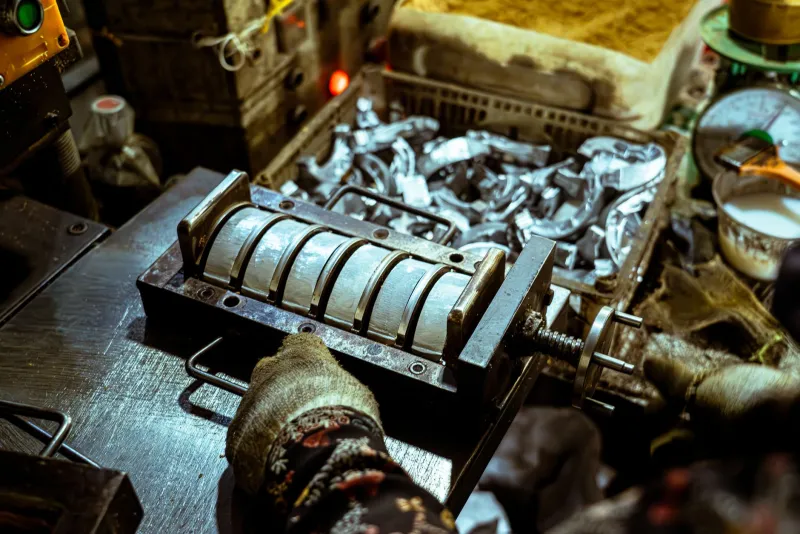
There is a persistent assumption in American manufacturing that newer equipment automatically means better output. Walk the floor of any well-run fabrication facility, however, and you will frequently find a different story—one where a twenty-year-old press brake, maintained with meticulous discipline and operated by a seasoned technician, produces tolerances that rival what a brand-new machine delivers on its best day.
The challenge is real. Mid-sized fabrication shops throughout the country face a persistent tension between capital constraints and competitive expectations. Clients are not interested in a shop's depreciation schedule; they want parts delivered on time, built to specification, and priced fairly. That pressure falls directly on shop managers and operators who must extract modern-level performance from equipment that predates many of their younger employees.
Understanding how top-tier fabricators navigate this challenge reveals a great deal about what separates competent shops from truly excellent ones.
The Scope of the Problem
The average age of manufacturing equipment in the United States has climbed steadily over the past two decades. Economic downturns, supply chain disruptions, and the extended lead times now common for capital equipment have all contributed to a situation where many facilities are running machinery well past its originally anticipated service life.
This is not inherently a crisis. Equipment that has been properly maintained can remain productive and accurate long beyond manufacturer recommendations. The problems emerge when deferred maintenance accumulates, when worn components go unreplaced, or when shops attempt to run aging machines at production volumes they were never designed to sustain.
For fabrication operations specifically, the consequences of equipment degradation show up in measurable ways: dimensional inconsistency across a production run, increased cycle times as machines require more operator attention, higher scrap rates, and elevated risk of unplanned downtime. Each of these outcomes carries a direct cost—and an indirect cost in client relationships.
Preventive Maintenance as a Competitive Strategy
The most straightforward tool available to shops managing legacy machinery is a rigorous, non-negotiable preventive maintenance program. This sounds obvious, but the discipline required to execute it consistently—particularly during high-volume production periods when taking a machine offline feels counterproductive—is where many facilities fall short.
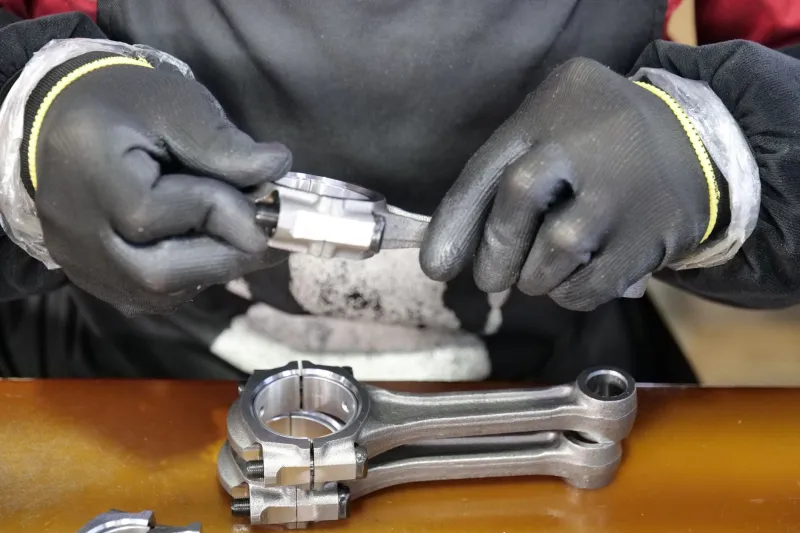
Effective preventive maintenance for fabrication equipment goes beyond scheduled lubrication and filter changes. It includes regular geometric calibration of press brakes and machining centers, systematic inspection of wear surfaces, hydraulic fluid analysis, and electrical system audits. Each of these activities generates data, and that data tells a story about where a machine is trending before it fails.
Shops that treat maintenance records as engineering documents rather than administrative paperwork gain a significant advantage. They can predict component failures with enough lead time to source parts and schedule downtime intentionally, rather than absorbing the full cost of an unplanned breakdown in the middle of a critical production run.
Retrofitting Versus Replacing: A Decision Framework
At some point in every aging machine's life, shop leadership faces a decision: invest in a retrofit or commit to a full replacement. Neither answer is universally correct, and the shops that navigate this decision well do so by evaluating several distinct factors rather than defaulting to either cost avoidance or reflexive capital spending.
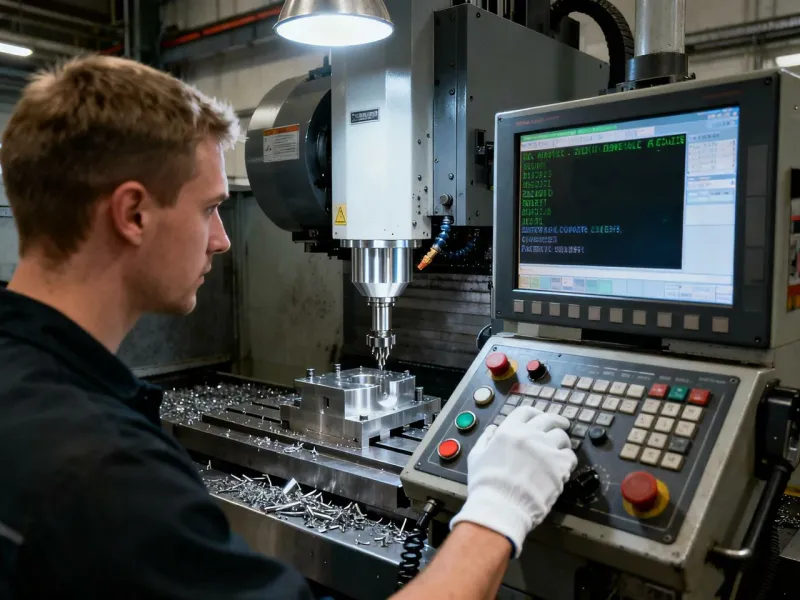
Retrofitting makes strong economic sense when the machine's core mechanical structure remains sound and the limiting factors are control systems, software, or specific worn subsystems. Replacing an older CNC control with a modern unit, for example, can dramatically extend a machining center's useful life while delivering meaningful improvements in programming capability, precision, and integration with digital workflow systems. The capital outlay is a fraction of full replacement, and the lead time is substantially shorter.
Replacement becomes the correct answer when structural fatigue compromises the machine's ability to hold tolerances, when the cost of ongoing maintenance approaches or exceeds amortized replacement cost, or when the production requirements of the shop have fundamentally evolved beyond what the legacy equipment can accommodate.
The most important discipline in this decision is honest assessment. Shops that defer replacement out of budget pressure alone—continuing to invest in machines that have genuinely reached the end of productive life—ultimately pay more than they save, both in direct costs and in the competitive disadvantage of chronically inconsistent output.
The Operator's Role in Compensating for Equipment Limitations
No discussion of legacy equipment management is complete without acknowledging the outsized role that experienced operators play in sustaining output quality. This is one of the most underappreciated competitive assets in American fabrication, and it is directly relevant to the question of machine age.
A skilled press brake operator understands the specific behavioral characteristics of the machine they work with every day. They know how much springback to anticipate from a given material on that specific machine, how to adjust for a ram that carries a slight but consistent deviation, and when to slow the cycle to maintain dimensional accuracy on complex geometry. This knowledge is not documented anywhere. It lives in the hands and judgment of the operator.
This is why workforce development and operator retention are not merely human resources concerns—they are engineering concerns. A shop that invests in training, creates career pathways for skilled operators, and builds institutional knowledge around its equipment portfolio is effectively extending the productive capability of every machine on its floor.
The inverse is equally true. High operator turnover on aging equipment is a compounding problem. New operators lack the machine-specific intuition that compensates for known limitations, scrap rates climb, and quality consistency erodes—not because the machine changed, but because the human element that offset its limitations walked out the door.
Integrating Legacy and Modern Equipment Strategically
Few fabrication shops operate with an entirely uniform equipment portfolio. The practical reality is a mixed floor, where some machines are relatively new and others have been in service for a decade or more. The shops that manage this environment most effectively do so by routing work deliberately—matching job requirements to equipment capabilities rather than simply filling machine time.
High-tolerance work with tight geometric requirements goes to the most capable, best-calibrated equipment available. Production runs with more forgiving specifications can be handled effectively by older machinery that is well-maintained but no longer at the leading edge of precision. This kind of intelligent job routing maximizes the productive contribution of every asset on the floor while protecting quality outcomes on the work that demands the highest standards.
It also creates a natural framework for capital planning. When job routing consistently reveals that a particular category of work is straining the shop's legacy equipment, that pattern is a data-driven signal that targeted investment in that capability area will generate measurable return.
Experience as Infrastructure
The fabrication industry sometimes romanticizes new technology as the primary driver of competitive advantage. And while modern equipment genuinely expands what is possible, the shops that consistently deliver for their clients are those that have built operational discipline into every layer of their business—including how they care for, operate, and strategically manage the equipment they already own.
Legacy machinery, maintained with rigor and operated by experienced hands, remains capable of producing work that meets demanding specifications. The challenge is not the age of the iron. The challenge is building the systems, the workforce, and the decision-making frameworks that allow that equipment to perform at its ceiling rather than drift toward its floor.
At GSS Fabrication, that kind of operational discipline is not a workaround. It is the standard.