Reading Between the Quote Lines: Five Warning Signs in a Custom Fabrication Proposal
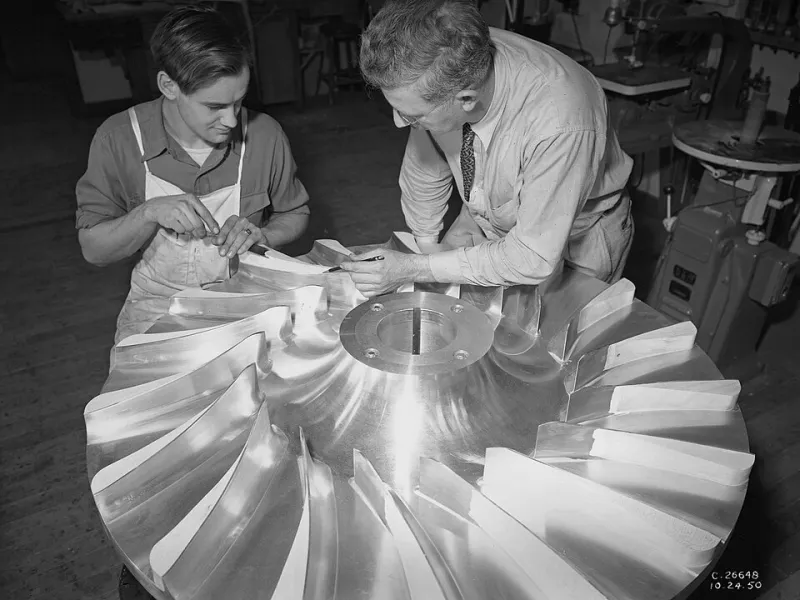
Photo: NASA Glenn Research Center, Public domain, via Wikimedia Commons
A custom fabrication quote can look reassuringly simple: a part number, a quantity, a unit price, and a lead time. Yet that document is also a technical promise. It encodes assumptions about tolerances, materials, inspection, finishing, scheduling, and change orders. When those assumptions are vague, the buyer inherits risk that may not surface until production is underway. For US project managers and engineers, reading between the line items is not an exercise in suspicion. It is a basic procurement discipline.
The following five red flags do not prove that a fabricator is acting in bad faith. They do, however, signal that the quote may be incomplete, optimistic, or poorly matched to the project's actual requirements. Each is worth a direct question before a purchase order is issued.
1. Tolerance Language That Deflects Rather Than Defines
A quote that promises to work to 'standard shop tolerances' without naming the standard, the inspection method, or the critical dimensions is leaving too much to interpretation. Tolerance decisions drive machining time, fixture design, inspection cost, and scrap rate. A vendor that quotes a tight tolerance without acknowledging its cost implications may be underestimating the work. A vendor that quotes a loose tolerance without confirming the drawing's functional requirements may be planning to deliver parts that fit poorly.
Ask which tolerance standard applies, how critical features will be measured, and whether the quoted price assumes first-article inspection or sampling. If the answer is that the shop will 'match the drawing,' ask for the drawing revision and a list of the features the shop considers critical. Precision begins with a shared definition of acceptable.
2. Exclusions That Are Buried, Missing, or Assumed Away
A clean-looking quote is not necessarily a complete quote. Material certifications, third-party testing, non-destructive examination, finishing, masking, crating, freight, and documentation are common exclusions. Some quotes bury these items in footnotes; others omit them entirely. The result is a low initial number that grows once the buyer discovers what is not included.
Request a written assumptions-and-exclusions page. It should state what material grade and mill source are assumed, what finish is included, who arranges freight, what documentation will be delivered, and what happens if the customer supplies material. A fabricator that cannot produce this page is either disorganized or counting on change orders to recover margin. Neither is a comfortable position for the buyer.
3. Lead Times Without a Schedule Basis
A single lead-time figure, such as 'six to eight weeks,' is not a schedule. It is an estimate without visible logic. What portion is material procurement? When does engineering review occur? Is the shop assuming a certain capacity window? Does the lead time include finishing and inspection, or only cutting and forming?
Unrealistic lead times are especially common in competitive bids, where the fastest promise wins the work and the schedule is renegotiated later. Ask for a milestone schedule with stated assumptions. For time-sensitive projects, ask what expedite fees would apply and which milestones are most likely to move. A fabricator that can explain its schedule is more likely to protect it.
4. Inspection and Acceptance Left Ambiguous
Quality does not happen by default. The quote should make clear who inspects the work, against what criteria, and with what documentation. Will the shop provide dimensional inspection reports? First-article inspection? Material traceability? Does the price include source inspection by the customer or a third party? What is the acceptance process if a dimension is disputed?
Ambiguity here creates expensive conversations after delivery. A buyer may believe that inspection is included because the quote mentions quality assurance, while the shop may believe it is providing only visual verification. Ask for the quality plan in writing. If the project involves safety-critical components or regulated industries, ask for the applicable standards and the records that will be retained.
5. Pricing Structure That Hides Change Risk
Unit price is only one part of fabrication cost. Setup charges, programming time, tooling, minimum order quantities, material price escalation, and change-order markups can materially alter the final invoice. A quote that presents a low unit price without a rate structure may be relying on future changes to recover its actual cost.
Request the shop's hourly rates, minimum charges, and change-order process. Ask how material price adjustments are handled and whether scrap is billed. For projects with uncertain quantities, ask for a break structure. A transparent pricing model may not be the lowest bid, but it is usually the most predictable.
A Quote Should Invite Scrutiny
The strongest fabrication quotes are not necessarily the longest or the most expensive. They are the ones that make assumptions visible. They define tolerances, list exclusions, explain schedules, assign inspection responsibility, and disclose how changes will be priced. That level of detail signals a shop that has thought through the work rather than one that is simply filling a template.
For buyers, the practical response is a short RFQ checklist: require an assumptions page, ask for a milestone schedule, confirm inspection deliverables, and request a change-order rate card. These questions take minutes to ask and can prevent months of rework. At GSS Fabrication, we treat a quote as the first engineering document in the project, not the last administrative one.