The Digital Drawbridge: Securing CAD Files Across the Fabrication Supply Chain
Photo: cybersecurity concept laptop with CAD engineering drawing in modern manufacturing office, via cdn.prod.website-files.com
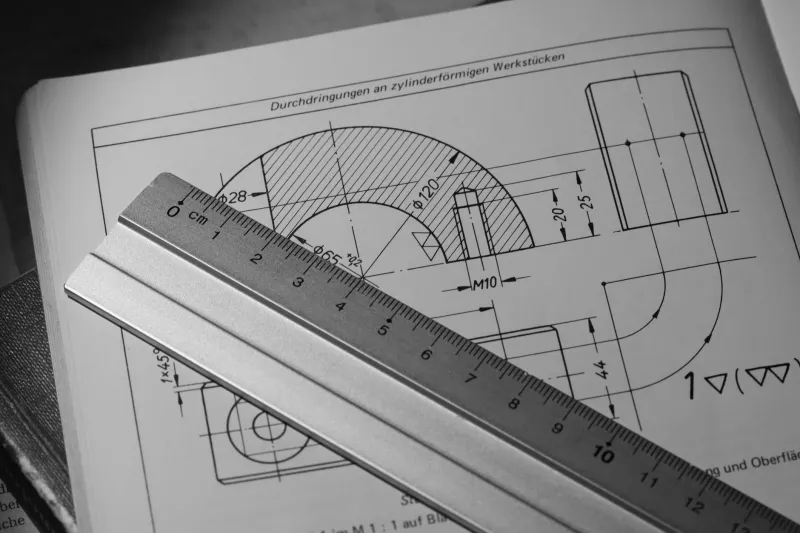
A CAD file is more than a drawing in digital form. It can contain the geometry of a customer's product, the tolerances that reveal how it functions, the material selections that reflect years of development, and the metadata that identifies the people and systems involved in its creation. When a fabrication shop requests a model for quoting, the customer is not simply sending a file. It is extending trust across a digital supply chain.
That trust is often handled casually. Files move by email attachment, consumer cloud links, USB drives, and shared folders. Subcontractors receive packages without consistent access controls. Former employees may retain credentials. In 2026, as manufacturing workflows become more digitized and customer audits become more rigorous, these habits represent a genuine cybersecurity risk.
Where the Exposure Begins
The most common vulnerabilities are also the most ordinary. An engineer emails a STEP file to a vendor using a personal account. A project manager shares a folder with 'anyone with the link' because it is faster than setting permissions. A shop stores customer drawings on a workstation that is also used for web browsing and email. A subcontractor receives the file and forwards it to another supplier without the original customer's knowledge.
Each of these actions creates a path for unauthorized access. Phishing remains a common entry point, but the risk is not limited to external attackers. Insider mistakes, lost devices, unpatched software, and stale user accounts can expose files just as effectively. Ransomware can encrypt design archives and halt production. Metadata can reveal customer names, project codes, and supplier relationships even when the geometry itself is not sensitive.
The Real Cost Is Not Just the Breach
For manufacturers, the consequences of a CAD exposure extend beyond a single incident. Proprietary designs may be copied or used to support counterfeit parts. Customer contracts may include confidentiality obligations that impose liability. Defense-related work may trigger ITAR or EAR requirements, and Department of Defense suppliers may face CMMC obligations. Even commercial customers increasingly ask vendors to complete security questionnaires before sharing drawings.
The reputational cost can be equally significant. A fabrication shop that loses a customer's files may find that the customer moves future work to a supplier with stronger controls. In a competitive market, security is becoming part of the qualification process, not a separate concern.
Minimum Security Hygiene for Fabrication Shops
A fabrication shop does not need to become a software company to protect customer files, but it does need basic controls. Access should be limited to employees who need the files to do their jobs. Multi-factor authentication should protect email, cloud storage, and remote access. Files should be encrypted in transit and at rest. Secure file transfer tools should replace consumer email attachments and shared links with open permissions.
Shops should maintain an inventory of devices and software, apply patches promptly, and separate production networks from general office browsing where practical. Endpoint protection and logging help detect problems, while tested backups reduce the impact of ransomware. Vendor agreements should require subcontractors to meet the same controls, and customer files should be deleted or returned according to a documented retention policy.
An incident response plan is also essential. Who calls the customer? Who contacts legal counsel? How are affected files identified? A short, practiced plan is far better than an improvised response under pressure.
Questions Customers Should Ask Before Sharing Drawings
Customers can reduce risk by asking direct questions during the quoting process. How will the files be transmitted? Who inside the shop will have access? Is multi-factor authentication required? Will subcontractors receive the files, and under what agreement? How long are files retained, and how are they deleted? What is the process for notifying customers of a breach?
For regulated work, customers should confirm whether the shop handles ITAR-controlled technical data, whether it has a current cybersecurity assessment, and whether its subcontractors are covered by the same obligations. These questions are not adversarial. They are the same questions a careful fabricator should be prepared to answer.
Building Security Into the RFQ
Security requirements should appear in the request for quote, not after the purchase order is issued. Customers can specify a secure transfer method, require encryption, limit subcontracting, and request confirmation of access controls. They can also classify files by sensitivity and share only what the quote requires. A full assembly model may not be necessary when a simplified envelope and critical features will suffice.
The digital drawbridge between customer and fabricator is essential to modern manufacturing. It allows faster quoting, fewer translation errors, and tighter collaboration. But a drawbridge must be guarded. At GSS Fabrication, we treat customer files as engineering assets that deserve the same discipline as the parts they describe.