When Great Engineering Meets the Shop Floor: Why Every Blueprint Needs a Fabricator's Eye
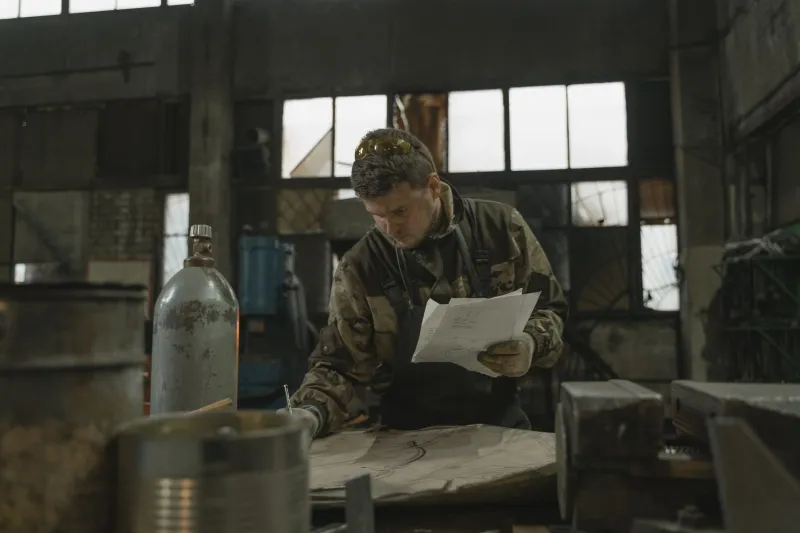
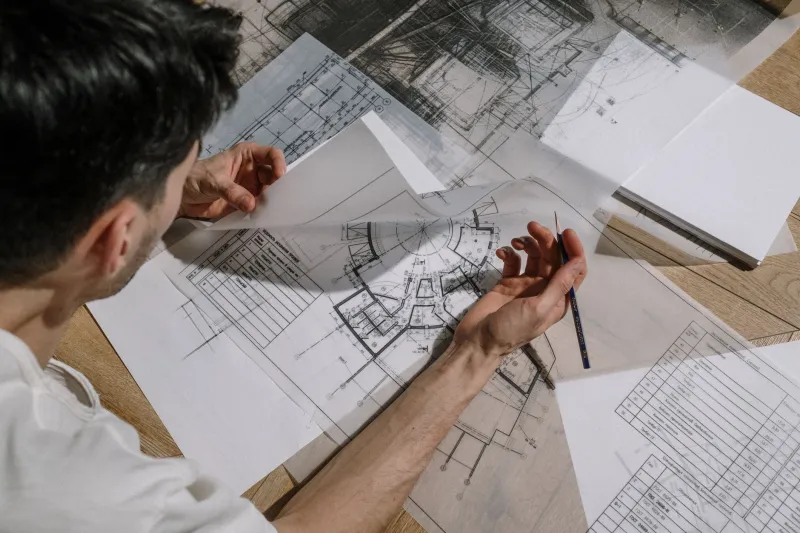
Engineering teams invest considerable time, talent, and technology into producing detailed fabrication drawings. The geometry is precise. The tolerances are specified. The material callouts are clear. By every conventional measure, the design is complete. And yet, experienced fabricators know that a technically complete drawing and a shop-floor-ready drawing are often two different documents.
This is not a criticism of engineering. It is a recognition of a structural gap that exists in nearly every manufacturing workflow — a gap created not by incompetence, but by the fundamental difference between designing in a digital environment and building in a physical one.
The Limits of What a Drawing Can Communicate
A blueprint communicates geometry, dimensions, materials, and tolerances. What it cannot communicate — at least not explicitly — is the sequence of physical operations required to produce the part, the behavior of real materials under real tooling, or the constraints imposed by actual shop equipment.
Consider a fabricated steel weldment with tight dimensional tolerances applied across multiple welded joints. On paper, the tolerances are achievable. In practice, weld distortion introduces cumulative variation that makes holding those tolerances across the full assembly exceptionally difficult without intermediate fixturing, controlled weld sequencing, or post-weld correction operations. None of those requirements appear on the drawing, yet all of them affect cost, lead time, and quality.
A fabricator reviewing that drawing early in the process will identify the issue immediately. A fabricator who receives the drawing after a purchase order has been issued is left managing a problem that should have been a design conversation.
Common Blind Spots That Surface at the Fabrication Stage
Certain design patterns generate fabrication complications with enough regularity that experienced shops have learned to watch for them as a matter of standard practice.
Access and tooling clearance is among the most frequent issues. Designs that call for welds, fasteners, or machined features in locations that cannot be physically reached with standard tooling require either design modification or custom solutions that add cost and time. What looks like open space in a CAD model can become an inaccessible pocket when actual tools, fixtures, and workholding equipment are introduced.
Bend radius and material behavior represent another persistent challenge. Sheet metal and structural components behave according to material-specific springback characteristics that vary with thickness, temper, and alloy. A bend radius specified without accounting for these properties may produce a part that requires multiple correction passes — or one that simply cannot be held to print without a different forming approach.
Surface finish and secondary operation sequencing frequently create downstream problems when not addressed at the drawing stage. A part that requires both tight-tolerance machining and a corrosion-resistant coating, for example, demands careful consideration of which operations must precede others. Applying coating before final machining defeats the purpose of the coating. Machining before coating may leave critical surfaces vulnerable. The drawing specifies the end state; the fabricator must determine how to reach it.
Weld symbol interpretation and joint accessibility are areas where even experienced engineers occasionally make assumptions that do not translate cleanly to the shop floor. A full-penetration weld called out on a joint that cannot be accessed from both sides requires either a design change or a qualified single-sided welding procedure — a distinction with real quality and qualification implications.
Why Early Collaboration Produces Better Outcomes
The solution to most of these issues is not more detailed drawings. It is earlier engagement between the engineering team and the fabrication partner.
When a fabricator is brought into the design conversation before the drawing reaches its final revision, the feedback loop is constructive and low-cost. Suggesting a change to a weld joint geometry at the drawing stage takes minutes. Suggesting the same change after a prototype has been built, inspected, and rejected takes weeks — and carries the cost of the scrapped prototype, the revised drawing, the new setup, and the delayed delivery.
This front-end collaboration is sometimes referred to as design for manufacturability (DFM) review, though the term can obscure what is actually a straightforward exchange: the engineer explains what the part needs to do, and the fabricator explains what it will take to build it. When both parties are at the table together, the result is a design that honors the functional requirements of the engineer and the physical constraints of the shop floor simultaneously.
At GSS Fabrication, this kind of early engagement is built into how we approach complex projects. When customers share drawings in advance of final release, our team reviews them with the same attention that will later go into production — not to challenge the engineering, but to identify and resolve the manufacturing considerations that drawings alone cannot fully capture.
The Cost Asymmetry of Late Discovery
One of the most important principles in fabrication project management is that the cost of resolving a design issue increases substantially at every stage of production. A dimensional conflict caught during drawing review costs a redline and a conversation. The same conflict caught during first-article inspection costs a scrapped part, a revised drawing, a new setup, and a delayed schedule. Caught during final assembly, the cost can include rework across multiple components, expedited material procurement, and schedule penalties.
This asymmetry is well understood in theory but often underweighted in practice. Project timelines create pressure to move from design to production quickly, and that pressure frequently compresses or eliminates the drawing review step that would have prevented the most expensive downstream problems.
The shops and engineering teams that consistently deliver on schedule are not the ones that skip the review to move faster. They are the ones that treat the review as an investment in the speed and reliability of everything that follows.
Building the Right Partnership
The relationship between an engineering team and a fabrication partner functions best when it operates as a genuine technical collaboration rather than a transactional exchange of drawings and parts. That requires fabricators who are willing to engage substantively with design questions, and engineers who are willing to hear manufacturing feedback as a contribution to the project rather than a challenge to the design.
For organizations that produce custom fabricated components regularly, formalizing this collaboration — through structured DFM reviews, pre-production kickoff meetings, or ongoing design-build partnerships — pays dividends across every project in the portfolio. The blueprint remains the authoritative document. The fabricator's input is what makes it buildable.
Precision-built work begins long before the first piece of material is loaded into a machine. It begins the moment an engineering team and a fabrication partner sit down together and ask the same question: what will it actually take to build this right?