What the Low Bid Doesn't Tell You: The Full Financial Picture of Offshore Fabrication
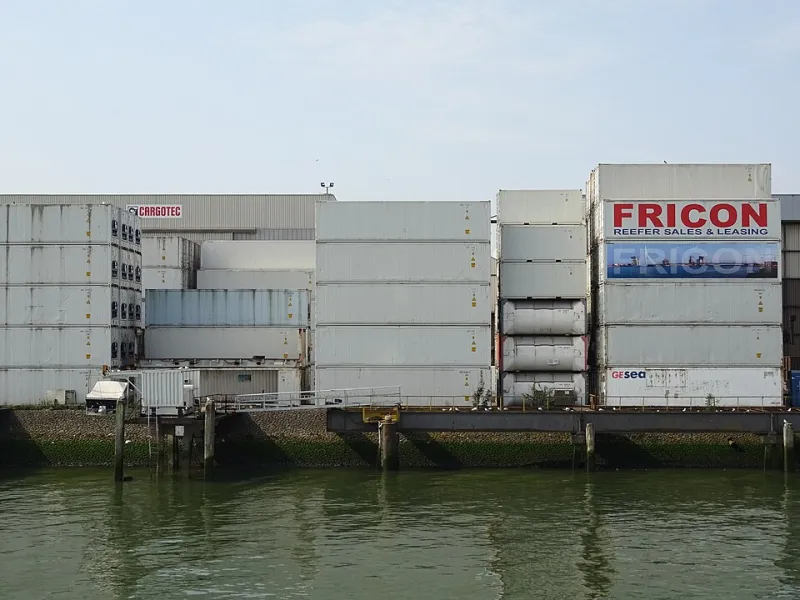
Photo: AgainErick, CC BY-SA 4.0, via Wikimedia Commons
For procurement managers and operations directors tasked with controlling costs, an offshore fabrication quote that arrives at thirty or forty percent below domestic pricing can feel like a budget win. The numbers look clean, the vendor's portfolio appears credible, and the pressure to reduce expenditures is real. Yet across American manufacturing, the pattern repeats with uncomfortable regularity: the savings projected at contract signing dissolve long before the finished parts reach the production line.
Understanding why requires looking beyond the per-unit price and examining every dollar that moves between the moment a purchase order is issued and the moment fabricated components are verified, accepted, and integrated into a finished product.
The Freight and Lead Time Equation
Ocean freight from major fabrication hubs in Asia or Eastern Europe introduces a structural delay that most cost models underestimate. Standard transit times from facilities in China or Vietnam to US ports routinely run five to eight weeks, and that figure does not account for port congestion, customs clearance, or last-mile logistics from the receiving port to the end facility.
For manufacturers operating lean inventories, that extended pipeline demands buffer stock—which ties up working capital. A company sourcing structural steel components offshore may need to carry six to ten weeks of safety stock simply to prevent line stoppages. When inventory carrying costs, warehouse space, and capital cost of money are factored in, the buffer requirement alone can consume a significant portion of the original price differential.
Fuel surcharges, container shortages, and geopolitical disruptions—all of which have proven to be persistent features of global shipping rather than temporary anomalies—add further unpredictability. The freight cost embedded in a quote signed in January may bear little resemblance to the actual landed cost when the shipment clears customs in April.
Tariffs, Duties, and the Regulatory Landscape
Section 232 and Section 301 tariffs have added meaningful cost burdens to steel and aluminum imports and to a broad range of fabricated metal goods originating from specific countries. These duties are applied to the customs value of the goods, meaning they scale with every other cost component—including freight—that inflates the declared value.
For a procurement team that secured an offshore quote prior to a tariff adjustment, the financial impact can be immediate and severe. Unlike domestic pricing, which is negotiated in US dollars under a stable regulatory framework, offshore agreements expose the buyer to currency fluctuation and unilateral policy changes in both the exporting country and the United States. Hedging those risks carries its own cost.
Customs classification disputes—where CBP determines that a fabricated assembly falls under a different Harmonized Tariff Schedule code than the importer anticipated—can result in unexpected duty assessments, penalties, and costly delays while goods sit in a bonded warehouse.
Quality Control: The Cost That Arrives Last
Perhaps the most financially damaging category of hidden offshore expense is quality failure discovered after goods have cleared customs. Dimensional nonconformances, surface finish defects, incorrect material certifications, and weld discontinuities that would be caught during in-process inspection at a domestic shop may not surface until fabricated components are presented to incoming inspection—or, in more serious cases, until they fail during assembly or in service.
One Midwest-based industrial equipment manufacturer learned this lesson on a structural frame program. After selecting an overseas fabricator based on a quote that represented a 28 percent savings over the domestic bid, the company received a shipment in which approximately 19 percent of the frames required rework to meet print tolerances. The cost of incoming inspection, rework labor, expedited domestic replacement parts, and the schedule delay to a key customer delivery exceeded the total projected savings from the offshore arrangement—by a considerable margin.
The company returned to a domestic fabrication partner for subsequent programs. The experience is far from unique. Across the precision fabrication industry, quality escape costs—including engineering time spent on root cause analysis, corrective action documentation, and supplier corrective action requests issued to vendors operating twelve time zones away—represent an underappreciated but very real line item.
Communication, Coordination, and the Time Zone Tax
Effective fabrication relationships depend on rapid, clear technical communication. Engineering changes, material substitutions, tolerance clarifications, and schedule adjustments require dialogue that can happen quickly when the shop and the customer share a time zone and a language.
When that relationship spans continents, every communication cycle introduces latency. A question submitted at the end of the US business day may not receive a substantive response until the following afternoon, after the overseas team has completed its next shift. On a fast-moving program, those delays compound. Engineering changes that a domestic shop could incorporate within hours may require days to confirm and implement with an offshore partner.
The hidden labor cost of managing overseas fabrication relationships is also routinely underestimated. Supplier quality engineers, procurement staff, and project managers spend measurably more time administering offshore programs than domestic ones—time that carries real salary and overhead cost, even when it never appears on a purchase order.
Reshoring as a Financial Decision
Growing numbers of US manufacturers are approaching reshoring not as a patriotic gesture but as a straightforward financial calculation. When total landed cost—inclusive of freight, duties, carrying cost, quality escape risk, and administrative burden—is stacked against a domestic quote, the offshore advantage frequently narrows to the point of irrelevance or reverses entirely.
For components with tight tolerances, complex geometries, or critical end-use applications, the risk-adjusted cost of offshore sourcing is often higher than domestic fabrication even before quality failures are factored in. The predictability of a domestic supply chain—shorter lead times, accessible engineering collaboration, consistent regulatory compliance, and traceable material certifications—has measurable value that belongs in any honest cost comparison.
Transparency as a Competitive Advantage
At GSS Fabrication, the approach to quoting reflects a commitment to the same transparency we encourage customers to demand from any fabrication partner. Our proposals capture the full scope of work, material specifications, and schedule commitments in plain terms—because a quote that holds up through delivery is worth more than one that simply wins the bid.
For procurement teams evaluating fabrication sourcing decisions, the most useful question to ask any vendor is not what the unit price is, but what the total cost of ownership looks like across the full program lifecycle. In our experience, that question consistently moves the conversation in the direction of domestic fabrication—and for very good financial reasons.