From Scrap Pile to Profit Center: How Smart Fabricators Eliminate Material Waste
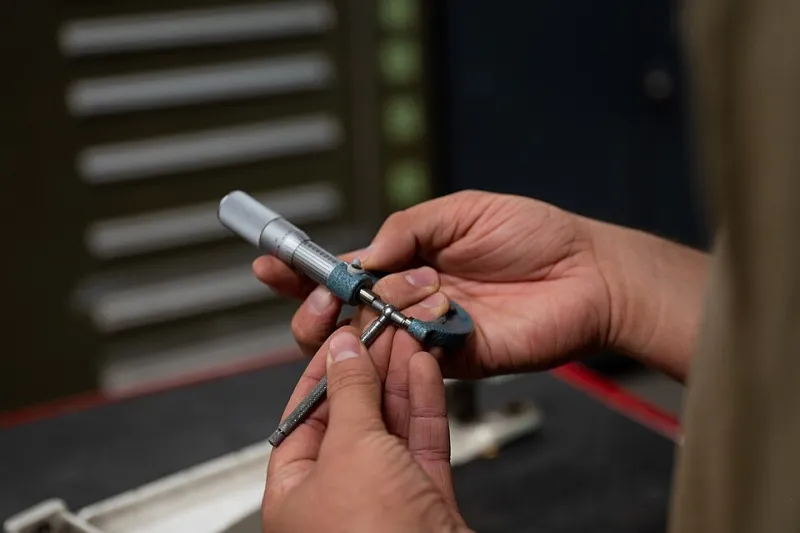
Photo: U.S. Air Force photo by Senior Airman Erin Dunkleberger, Public domain, via Wikimedia Commons
Steel and aluminum are not cheap. As of recent years, domestic hot-rolled steel coil prices have swung between $700 and $1,800 per ton depending on market conditions, and aluminum sheet has followed similarly volatile trajectories. For manufacturers sourcing custom fabricated components, material cost is typically the single largest line item in a project budget. And yet, a surprising share of that material never makes it into the finished product.
Industry estimates suggest that scrap rates in metal fabrication operations commonly range from 5 to 15 percent of raw material input, with poorly optimized processes pushing that figure even higher. On a project involving $200,000 in raw material, a 10 percent scrap rate represents $20,000 that was purchased, handled, processed, and discarded. Multiply that across an annual production program and the number becomes difficult to ignore.
The good news is that material waste is one of the most addressable inefficiencies in the fabrication process. Unlike labor costs or overhead, scrap is largely a function of decisions—decisions about design, about process sequencing, about nesting strategy, and about what happens to remnant material after production. Fabricators who treat those decisions with the same rigor they apply to dimensional quality are turning waste reduction into a genuine competitive advantage.
The Waste Starts Earlier Than Most People Think
Conventional thinking frames scrap as a production problem—something that happens on the shop floor when cuts go wrong or setups drift out of alignment. In reality, a significant portion of material waste is locked in before a single piece of metal is touched. It is built into the design.
Parts designed without consideration for how they will be cut, bent, or welded frequently force fabricators into inefficient material utilization. A component with an unusual profile may not nest efficiently alongside other parts on a standard sheet, leaving large remnant areas that cannot be reused. Features placed too close to material edges may require oversized blanks to allow adequate clamping or tooling clearance. Tight bend radii on thick material may demand additional stock allowance to prevent cracking.
This is why design-for-fabrication (DFF) reviews—structured conversations between engineering teams and fabricators early in the development process—are among the highest-return activities available to manufacturing organizations. When a fabricator can flag a design feature that doubles material consumption before tooling is ordered, the savings are immediate and compounding.
Nesting: Where Geometry Meets Economics
For shops running laser cutting, plasma cutting, or waterjet operations, nesting is the process of arranging part profiles on a sheet or plate to maximize material utilization. Done well, it is a form of applied geometry that can dramatically reduce the gap between purchased material and shipped product.
Modern nesting software uses optimization algorithms to evaluate thousands of possible arrangements and identify configurations that minimize kerf waste and remnant area. The difference between a manually arranged nest and a software-optimized one can represent several percentage points of material yield on a complex job—a meaningful figure when material costs are running into the tens of thousands of dollars.
True-shape nesting, which allows irregular profiles to be interlocked rather than bounded by rectangular envelopes, typically outperforms rectangular nesting by a wide margin on complex geometries. Mixed-part nesting—combining multiple part numbers on a single sheet—further improves utilization when job sequencing allows it. Fabricators who invest in advanced nesting capabilities and apply them consistently are delivering measurable value to customers beyond the quoted price per part.
Remnant Management: The Value Hiding in the Scrap Bin
Not all remnant material is created equal. Large offcuts with predictable geometry may be perfectly usable for future jobs, provided they are properly catalogued and stored. A fabricator with a disciplined remnant inventory system can draw on that stock for small-quantity orders, prototype work, or repair projects—reducing raw material purchases and passing savings along to customers.
Without such a system, valuable material ends up in the scrap bin simply because no one tracked it. Shops that manage remnants as a productive asset rather than a disposal problem create an internal material supply that improves both cost performance and lead time responsiveness.
For material that genuinely cannot be reused, recycling partnerships with domestic metal processors offer a recovery mechanism. Ferrous and non-ferrous scrap both carry market value, and fabricators with established recycling programs capture that value rather than treating disposal as a pure cost. Some forward-looking operations have structured these relationships as formal revenue streams, effectively turning their scrap output into a secondary income source.
Process Efficiency and the Role of Lean Principles
Beyond design and nesting, waste reduction in fabrication draws heavily from lean manufacturing principles developed in the automotive industry and now widely applied across industrial production. The lean framework identifies seven categories of waste—overproduction, waiting, transportation, over-processing, inventory, motion, and defects—each of which has direct analogs in a fabrication environment.
Defect-driven scrap is perhaps the most direct form of material waste. A weld that fails inspection, a cut that drifts outside tolerance, a formed part that cracks during bending—each represents raw material, labor, and machine time that must be written off. Reducing defect rates through tighter process control, better tooling maintenance, and more rigorous first-piece verification directly reduces scrap generation.
Overproduction is a subtler contributor. Running extra parts to build a buffer against anticipated rejects may seem prudent, but it consumes material that may never be used, ties up working capital in inventory, and obscures true process capability. Fabricators who have invested in process stability can run closer to exact quantities with confidence, reducing the overage-driven waste that inflates effective material costs.
Sustainability as a Business Differentiator
For manufacturing organizations with corporate sustainability commitments—and the number is growing steadily across US industry—a fabrication partner's waste performance has implications beyond the project budget. Material efficiency directly affects the carbon footprint of a manufactured product, and procurement teams at large industrial companies are increasingly asking suppliers to document and improve their environmental metrics.
Fabricators who can demonstrate low scrap rates, active remnant reuse programs, and certified recycling partnerships are better positioned to serve this segment of the market. Sustainability credentials that were once considered a differentiator for consumer-facing brands are now becoming relevant qualifications in B2B industrial procurement.
Making Waste Reduction a Shared Objective
The most effective scrap reduction initiatives are collaborative. They require fabricators and their customers to share information openly—about design intent, about production volumes, about material specifications—and to treat waste as a shared problem rather than the fabricator's concern alone.
At GSS Fabrication, we approach material efficiency as a partnership obligation. From early-stage design reviews to optimized nesting strategies and structured remnant management, our processes are built to protect our clients' material investment at every stage of production. In an environment where raw material costs remain volatile and sustainability expectations continue to rise, that commitment is not just good practice—it is good business.