What Expedited Fabrication Really Costs: The Price Tag Behind the Rush
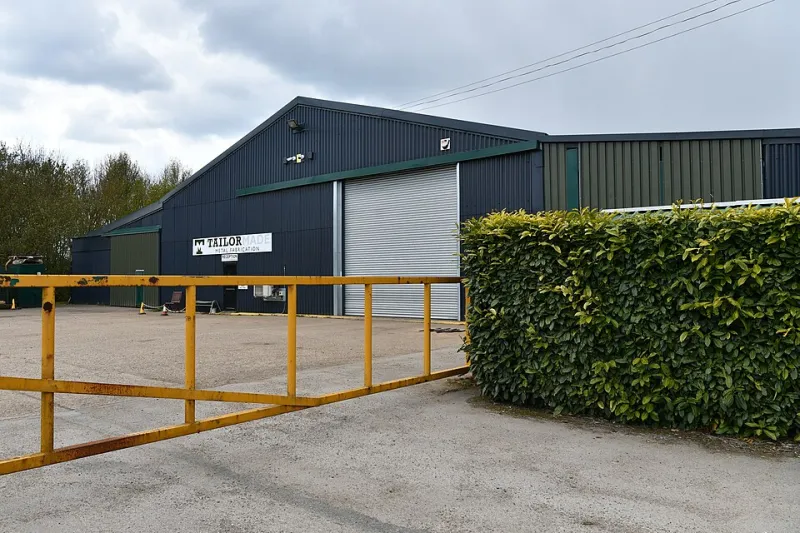
Photo: Michael Garlick , CC BY-SA 2.0, via Wikimedia Commons
There is a persistent assumption in manufacturing procurement: if a project is behind schedule, accelerating the fabrication timeline will recover lost ground without significantly impacting the bottom line. It is a reasonable instinct. Urgency feels productive. Speed signals commitment. But when the invoices are reconciled and the post-project audits are complete, the numbers frequently tell a different story.
At GSS Fabrication, we have worked with clients across heavy industry, infrastructure, and commercial construction for years. One pattern surfaces consistently—the organizations that plan fabrication timelines deliberately and realistically almost always achieve better outcomes, both financially and operationally, than those that treat compressed schedules as a standard procurement strategy.
This article is an honest examination of what rush fabrication actually costs, and why the savings promised by speed are often illusory.
The Premium That Appears Before Work Begins
The most visible cost of an expedited order is the surcharge applied at the point of quoting. Most fabrication shops—including precision operations that invest heavily in CNC equipment, certified welders, and quality assurance protocols—apply a rush premium that typically ranges from 15 to 40 percent above standard pricing. That figure alone should prompt scrutiny.
But that surcharge only captures part of the story. Before a single cut is made, an expedited order generates behind-the-scenes costs that rarely appear as line items on a quote. Material procurement is accelerated, which means suppliers are contacted outside normal purchasing cycles. Spot pricing on steel, aluminum plate, or specialty alloy stock can run measurably higher than contract pricing secured through planned ordering. In volatile commodity markets—a condition that has characterized American steel and aluminum supply chains for much of the past decade—the difference between planned procurement and emergency procurement can be substantial.
For buyers focused on the headline price of a fabrication quote, these upstream costs are invisible. They are absorbed into overhead or passed along as material upcharges, but they are real, and they compound.
Labor Disruption and the Efficiency Penalty
Fabrication shops operate on production schedules that balance equipment utilization, skilled labor deployment, and material flow. When a rush order enters the queue, something else gets displaced. This is not a hypothetical—it is a mechanical reality of how shop floors function.
Accommodating a compressed timeline often requires overtime labor, shift extensions, or the reallocation of certified welders and machinists from other projects. Overtime premiums in skilled trades are not trivial. A journeyman welder earning $35 to $50 per hour at standard rates may cost 50 percent more under overtime provisions. Multiply that across a fabrication team working extended shifts to meet an aggressive deadline, and the labor cost differential becomes significant.
Beyond the dollar figure, there is the human performance variable. Fatigue affects precision. Studies in industrial ergonomics consistently demonstrate that error rates in repetitive, high-concentration tasks—exactly the kind of work that defines quality metal fabrication—increase meaningfully as shift duration extends beyond standard hours. More errors mean more rework. More rework means more material consumed, more machine time expended, and more labor hours logged. The efficiency that rush scheduling was supposed to generate begins to evaporate.
Material Waste and Quality Compromise
Precision fabrication depends on methodical process sequencing. Cutting plans are optimized to minimize scrap. Welding procedures are staged to control heat input and distortion. Inspection checkpoints are distributed across the production workflow to catch deviations early, when correction is least costly.
Compressed schedules pressure every one of these controls. Cutting optimization takes time that a rush order does not allow. Welding sequences may be shortened or reordered to hit milestone dates, increasing the risk of warping or dimensional inaccuracy. Inspection intervals get compressed, meaning defects that would have been caught mid-process are sometimes discovered only at final inspection—or worse, after delivery.
The downstream cost of a quality failure on a rush order is particularly punishing. Rework at the receiving facility, field corrections on an installation site, or outright replacement of fabricated components can dwarf the original rush premium many times over. In industries where fabricated components integrate into larger assemblies or structural systems, a dimensional nonconformance can halt an entire project until resolution is achieved.
The Relationship Cost That Never Appears on an Invoice
There is a dimension of expedited fabrication that resists easy quantification but carries genuine long-term financial weight: the effect on the fabricator-client relationship.
When a shop absorbs the operational disruption of a rush order—displacing other clients, extending its workforce, and compressing its quality processes—it is making a calculated investment in customer service. Repeat rush requests, however, shift that dynamic. A fabrication partner that is perpetually asked to sacrifice schedule predictability and margin health for urgent turnarounds will eventually respond by pricing the relationship accordingly, deprioritizing the account in favor of more plannable work, or declining to quote at all.
For procurement professionals, this represents a strategic risk that is often underappreciated. Access to a reliable, high-quality fabrication partner is a competitive asset. Eroding that relationship through chronic urgency has a real cost, even if it never shows up as a line item.
Planning as a Competitive Advantage
The argument here is not that expedited fabrication is never appropriate. Genuine operational emergencies exist, and a capable fabrication shop should be equipped to respond to them. The argument is that rush orders should be the exception, not the default procurement posture.
Organizations that invest in accurate project scheduling, early engagement with fabrication partners, and realistic lead-time planning consistently realize lower unit costs, higher quality outcomes, and more resilient supply relationships. These are not abstract benefits—they translate directly into project profitability and operational reliability.
At GSS Fabrication, we encourage our clients to engage us as early in the project planning cycle as possible. Early engagement allows us to optimize material procurement, allocate skilled labor efficiently, and build quality assurance into every stage of production—not as an afterthought, but as a structural feature of the workflow.
Speed, when it is truly necessary, has its place. But in precision fabrication, the most cost-effective timeline is almost always the one that was planned from the start.