Precision Metal Fabrication Is Everywhere—These 5 Industries Prove It
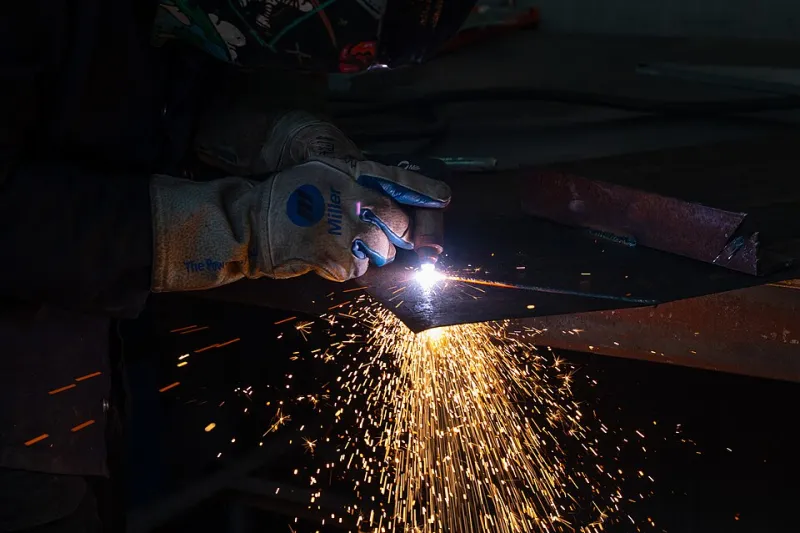
Photo: U.S. Air Force photo by Senior Airman Erin Dunkleberger, Public domain, via Wikimedia Commons
Ask most people to picture a metal fabrication project, and they will likely imagine a structural steel beam, an industrial pipeline, or a heavy equipment frame. Those applications are real and significant. But they represent only a fraction of the environments where precision fabricated metal components perform critical functions every day.
Custom fabrication—the kind that requires exacting tolerances, certified materials, and engineered solutions rather than off-the-shelf parts—is woven into industries that do not always identify themselves as fabrication customers. Recognizing that connection matters, both for procurement professionals seeking the right manufacturing partner and for fabricators looking to serve markets that need their capabilities.
Here are five industries where custom metal fabrication plays an indispensable role, often without receiving the recognition it deserves.
1. Renewable Energy: The Metal Backbone of the Clean Power Transition
The United States is in the middle of a significant energy infrastructure buildout. Wind farms are expanding across the Great Plains and offshore along the Atlantic seaboard. Utility-scale solar installations are proliferating in the Sun Belt. Each of these projects is, at its foundation, a fabrication project.
Wind turbine towers are fabricated steel structures, typically assembled from rolled and welded cylindrical sections that must meet precise dimensional and weld quality standards. The mounting systems, transformer enclosures, and cable management structures at solar installations all require custom fabricated components. Perhaps less visibly, the brackets, frames, and structural supports that integrate inverters, batteries, and control systems into energy storage facilities are precision-fabricated parts that must perform reliably in outdoor environments for decades.
The fabrication challenge in renewable energy is not just dimensional accuracy—it is durability. Components must resist corrosion, thermal cycling, and mechanical fatigue over service lives that often exceed 20 years. Material selection, surface treatment, and weld quality are not optional considerations; they are engineering requirements.
2. Medical Device Manufacturing: Where Tolerances Are Measured in Thousandths
The medical device sector is one of the most demanding environments for precision fabrication, and it is one that many general fabricators are not equipped to serve. Surgical instruments, imaging equipment housings, sterilization enclosures, laboratory workstations, and the structural frames of diagnostic machines all incorporate custom fabricated metal components.
What distinguishes medical fabrication from standard industrial work is the convergence of extreme dimensional precision, stringent material traceability requirements, and surface finish standards that directly affect patient safety and equipment performance. Stainless steel grades with specific corrosion resistance profiles are common. Weld quality must meet standards that prevent crevice formation where biological contamination could accumulate. And documentation—material certifications, inspection records, dimensional reports—is not optional; it is a regulatory requirement.
For fabricators capable of operating within these constraints, the medical device market represents a high-value, relationship-driven segment where quality and consistency are rewarded over the long term.
3. Aerospace Supply Chains: Fabrication at the Edge of Performance
Commercial aerospace is frequently discussed in terms of major airframe manufacturers and engine producers, but the supply chain that feeds those programs is vast, geographically distributed, and heavily dependent on precision fabrication at every tier.
Ground support equipment, tooling fixtures, test stands, and maintenance platforms are all fabricated structures that must meet aerospace-grade dimensional and material standards. Within aircraft themselves, brackets, frames, access panels, and structural inserts are often custom fabricated components produced by specialty shops working to engineering drawings with tolerances measured in thousandths of an inch.
The aerospace supply chain in the United States is also subject to rigorous quality management requirements, including AS9100 certification standards that govern how fabricators document, inspect, and control their production processes. For fabrication shops that have invested in these certifications and the quality infrastructure they require, aerospace represents a market where precision capabilities are directly compensated.
4. Water and Wastewater Infrastructure: The Unglamorous but Essential Market
America's water infrastructure is aging, and the federal investment flowing through programs like the Infrastructure Investment and Jobs Act is beginning to drive a significant wave of replacement and upgrade projects. Wastewater treatment plants, water distribution systems, pumping stations, and stormwater management facilities all incorporate custom fabricated components that are rarely visible to the public but are essential to daily operations.
Gates, screens, weirs, pipe supports, equipment platforms, and chemical feed systems are typical fabrication deliverables in this sector. The material requirements are demanding—many components must resist both chemical corrosion from treatment processes and biological exposure from the waste streams they manage. Stainless steel, duplex alloys, and specialty coated carbon steel are common material specifications.
Perhaps the most significant characteristic of infrastructure fabrication is the project scale and documentation burden. Municipal and utility clients operate under procurement frameworks that require detailed quality documentation, material traceability, and third-party inspection in many cases. Fabricators who understand how to operate within these frameworks—and who can deliver the paperwork as reliably as the parts—are well positioned in this growing market.
5. Food and Beverage Processing: Hygiene, Durability, and Custom Geometry
The food and beverage manufacturing sector in the United States is one of the largest segments of the domestic industrial economy, and its facilities are filled with custom fabricated equipment. Conveyors, hoppers, mixing vessels, filling line frames, sanitary enclosures, and processing platforms are all fabricated structures designed to function in environments that are simultaneously demanding in terms of hygiene, temperature, and mechanical stress.
Sanitary fabrication—the discipline of producing metal components that meet food contact safety standards—requires specific material grades, weld finishing protocols, and design geometries that eliminate horizontal surfaces where water or product residue can accumulate. The USDA and FDA establish requirements that flow directly into fabrication specifications, and processors who purchase non-compliant equipment face both operational and regulatory consequences.
Custom geometry is also a defining feature of food processing fabrication. Production lines are configured around specific product types, facility layouts, and throughput targets. Off-the-shelf equipment rarely fits these configurations precisely, which means custom fabricated solutions are not a premium option—they are frequently the only practical option.
Recognizing the Opportunity
What these five industries share is a dependence on precision fabrication that is structural, not incidental. Their operations cannot function without custom metal components built to exacting standards. Yet in each of these sectors, the fabrication content of what they do is often underappreciated—by the industries themselves and by fabricators who have not considered these markets as primary targets.
At GSS Fabrication, our capabilities span the material grades, quality documentation standards, and precision tolerances that these industries require. Whether the application is a structural component for an energy facility, a sanitary enclosure for a food processing line, or a precision fixture for an aerospace program, the foundational commitment is the same: precision built, industrial strength.
Recognizing where fabrication expertise is needed is the first step toward building the partnerships that put that expertise to work.