When the Global Supply Chain Breaks, Your Fabrication Partner Is Your First Line of Defense
Photo: Arthur S. Siegel, Public domain, via Wikimedia Commons
The Fragility Nobody Planned For
For the better part of two decades, global supply chain optimization operated on a single dominant logic: source wherever costs are lowest, move inventory as efficiently as possible, and trust that the system will function as designed. It was a reasonable bet during periods of geopolitical stability and predictable logistics. Then it wasn't.
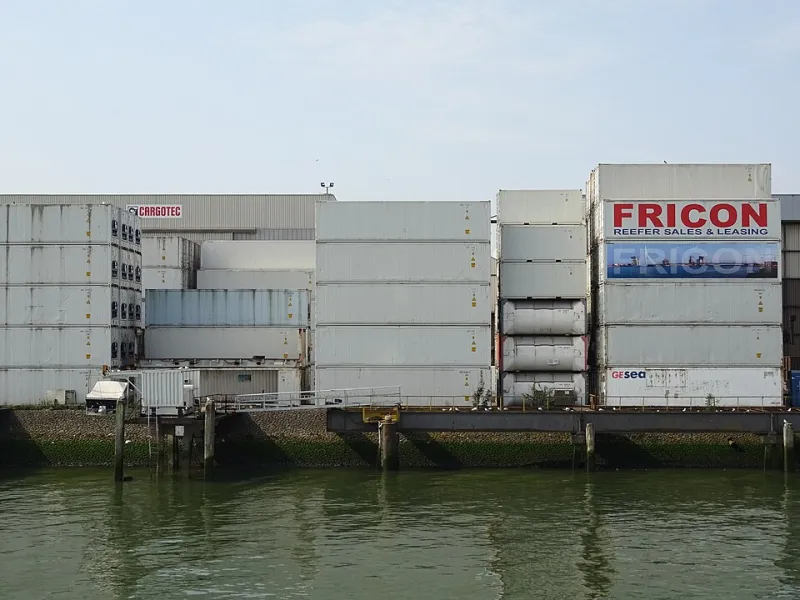
The disruptions that began in 2020 and continued well into subsequent years did not merely inconvenience US manufacturers. They exposed a structural fragility that had been accumulating quietly beneath the surface of lean, globally distributed supply chains. Port congestion, container shortages, raw material bottlenecks, and the cascading effects of single-source dependencies brought production lines to a halt across industries that had no contingency plan for a world where their supply chains simply stopped working.
The lesson that many American manufacturers took from that experience was not simply that offshore sourcing carries logistical risk. It was that the entire model of treating fabrication as a commodity—interchangeable, endlessly substitutable, optimized purely for unit cost—had left them strategically exposed in ways that no amount of safety stock could fully buffer.
The Difference Between a Vendor and a Partner
The distinction between a fabrication vendor and a fabrication partner is not semantic. It describes fundamentally different operational relationships with fundamentally different implications for supply chain resilience.
A vendor relationship is transactional. You submit a drawing, receive a quote, place a purchase order, and wait for delivery. The fabricator has no particular investment in your production schedule, your engineering constraints, or your downstream customer commitments. If capacity becomes constrained, if raw material costs spike, or if a design change requires rapid re-tooling, the response time is governed by the vendor's priorities—not yours.
A partner relationship operates differently. A domestic fabrication partner with an established relationship knows your product lines, understands your tolerance requirements, maintains familiarity with your engineering team, and has a direct stake in your operational success. When conditions change—and in the current environment, conditions change frequently—that relationship enables a quality and speed of response that a transactional vendor cannot provide.
This distinction has become operationally significant in ways that procurement teams are still working to fully internalize. During recent supply disruptions, manufacturers with established domestic fabrication partnerships were able to accelerate design changes, shift material specifications in response to availability constraints, and maintain production continuity in ways that those relying on offshore vendors simply could not. The communication bandwidth of a domestic relationship—same time zone, shared language, accessible facility, aligned regulatory environment—proved to be a genuine competitive advantage.
Geographic Proximity Is a Capability, Not Just a Convenience
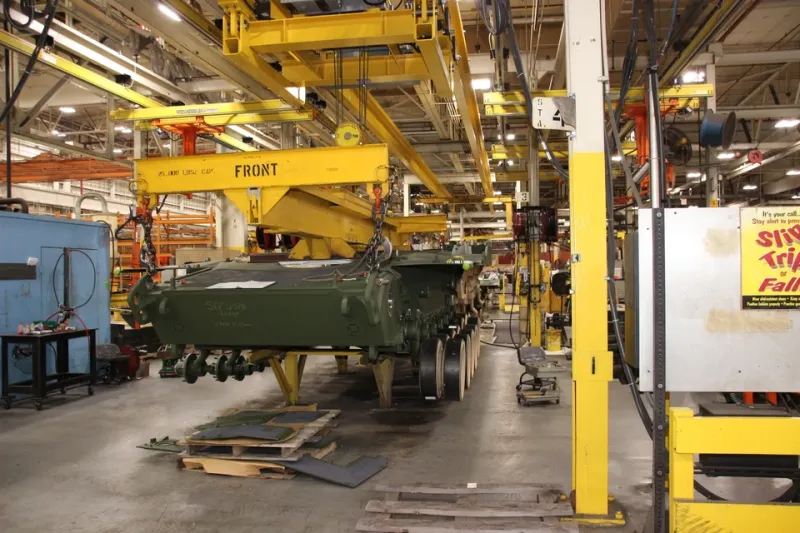
One of the underappreciated dimensions of domestic fabrication partnerships is the operational value of physical proximity. This goes beyond the obvious benefit of shorter shipping distances, though that matters considerably when lead times are measured in weeks rather than months.
Proximity enables site visits. It enables joint engineering reviews. It enables rapid prototype iterations that would be logistically impractical with an overseas supplier. When a design change is needed—whether driven by a customer specification update, a field performance finding, or a material substitution—a domestic fabricator can respond in days. The same change routed through an offshore supplier may require weeks of communication, revised drawings transmitted across time zones, sample production and international shipping for approval, and a revised production schedule that adds months to the timeline.
For manufacturers operating in industries where design agility is a competitive requirement—defense, energy infrastructure, industrial automation, and others—that response time differential is not a minor efficiency consideration. It is a capability gap that directly affects market competitiveness.
Furthermore, domestic fabrication partnerships support a level of quality transparency that offshore relationships structurally cannot. When your fabrication partner is a drive away, third-party audits are straightforward, in-process inspections are feasible, and the kind of collaborative problem-solving that prevents defects from reaching production scale is genuinely accessible. That transparency is itself a form of risk management.
Rethinking the Cost Calculus
The persistence of offshore fabrication sourcing, even in the face of demonstrated supply chain risk, is largely a function of how costs are calculated. Unit cost comparisons that do not account for inventory carrying costs, expediting fees, quality escapes, design change delays, and the operational overhead of managing relationships across fourteen-hour time differences will consistently favor offshore sources on paper.
The disruptions of recent years have forced a more complete accounting. When a production line goes down because a shipment is stranded at a port, the cost of that downtime rarely appears in the procurement model that justified the offshore sourcing decision. When a design change requires a six-week delay because the overseas supplier needs time to retool and re-sample, the cost of that delay—in lost revenue, in customer relationship damage, in internal engineering resources consumed—is rarely attributed to the sourcing strategy that created the dependency.
A more accurate cost model includes these factors. When it does, the gap between domestic and offshore fabrication costs frequently narrows considerably, and in many cases reverses entirely once the full risk-adjusted economics are visible.
Strategic Infrastructure, Not a Commodity Service
The manufacturers who have navigated recent supply chain volatility most successfully share a common characteristic: they treated their domestic fabrication relationships as strategic infrastructure rather than interchangeable commodity services. They invested in those relationships during stable periods, communicated openly about production forecasts and design roadmaps, and built the kind of mutual familiarity that enables rapid, effective response when conditions deteriorate.
At GSS Fabrication, the relationships we maintain with our manufacturing partners are built on exactly that foundation. Understanding a customer's production environment, their engineering culture, and their operational priorities is not incidental to delivering quality fabrication—it is central to it. When supply chains tighten, when schedules compress, or when specifications change, that foundation is what makes rapid, reliable response possible.
The global supply chain will continue to face disruption. Geopolitical pressures, climate-related logistics events, raw material market volatility, and the structural complexity of globally distributed production are not temporary conditions. They are the operating environment that US manufacturers must plan around.
In that environment, a domestic fabrication partnership is not a backup plan. It is a primary strategic asset—one that delivers supply chain resilience, engineering agility, quality transparency, and operational continuity that no offshore vendor relationship, regardless of unit cost, can reliably replicate.