The True Price of Doing It Yourself: Why In-House Fabrication Often Costs More Than It Saves
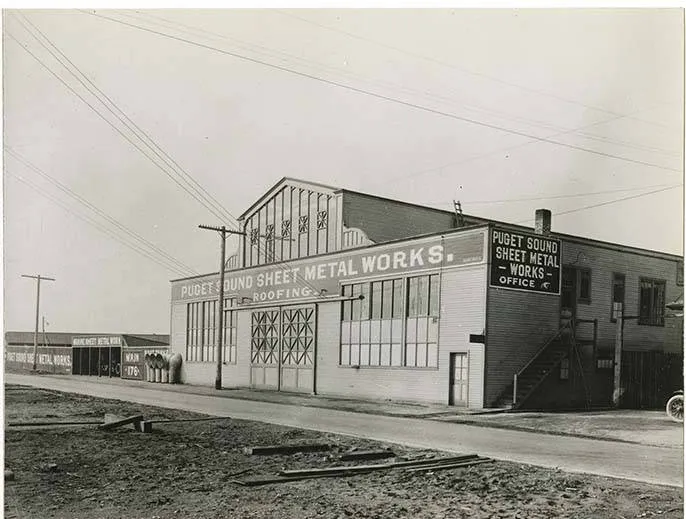
Photo: Unknown authorUnknown author, Public domain, via Wikimedia Commons
The appeal of in-house fabrication is straightforward: control your own production timeline, reduce dependency on outside vendors, and—at least in theory—capture the margin you would otherwise pay a specialized shop. It is a compelling argument, and one that persuades a significant number of manufacturers and industrial companies each year. Yet for many of those same organizations, the financial outcome tells a different story.
The problem is not that in-house fabrication is inherently flawed. The problem is that its true cost is rarely calculated completely before the commitment is made. Equipment purchases, facility modifications, workforce development, ongoing maintenance, and quality control infrastructure represent a constellation of expenses that, when totaled, often exceed what a competent fabrication partner would have charged from the start.
The Capital Equipment Commitment Nobody Fully Anticipates
The most visible upfront cost of building an internal fabrication capability is the machinery itself. Depending on the scope of work, a company might be looking at CNC plasma tables, press brakes, MIG and TIG welding systems, waterjet cutters, or tube bending equipment—each representing tens of thousands to hundreds of thousands of dollars in acquisition costs.
What is frequently underestimated is the full ecosystem surrounding that equipment. Installation, calibration, tooling packages, and facility upgrades—including power supply modifications, ventilation systems, and floor reinforcement—add substantial cost before a single part is ever produced. Industry data consistently shows that companies underestimate total equipment buildout costs by 20 to 40 percent when conducting initial feasibility studies.
Capital equipment also depreciates. Unlike a specialized fabrication shop that spreads equipment depreciation across dozens of active clients and thousands of production hours annually, an in-house operation absorbs that depreciation against a much narrower production volume. The per-part cost of that depreciation can be surprisingly high when production runs are intermittent or demand fluctuates seasonally.
Labor Is More Expensive Than It Appears on a Job Posting
Skilled fabricators—certified welders, CNC machinists, quality inspectors—are among the most sought-after tradespeople in the American manufacturing workforce. Wages in this sector have risen steadily, and in many regions of the country, qualified candidates are genuinely difficult to recruit and retain.
Beyond base wages, an employer must account for benefits, payroll taxes, workers' compensation premiums, and the administrative overhead of managing a skilled trades workforce. For welding positions specifically, certification requirements add another layer of cost, as AWS or ASME certifications must be maintained and periodically renewed.
There is also the learning curve to consider. Even experienced hires require time to become productive within a new environment, and that transition period—during which output is lower and error rates are higher—carries a real cost that rarely appears in initial labor projections. For companies whose core competency lies outside of fabrication, managing a skilled trades team is a management challenge that diverts attention and resources from the business's primary value-creating activities.
Maintenance Overhead: The Ongoing Tax on In-House Equipment
Industrial fabrication equipment requires regular preventive maintenance, periodic calibration, and occasional unplanned repair. For a business that operates fabrication as a secondary function, these demands can be disruptive in ways that compound over time.
When a press brake goes down at a dedicated fabrication shop, the operation has redundant capacity, experienced maintenance personnel, and established vendor relationships to manage the disruption. When the same machine fails inside a company whose primary business is something else entirely, the impact on production schedules can be severe, and the path to resolution is often slower and more expensive.
Annual maintenance costs for industrial fabrication equipment typically run between 2 and 5 percent of the original equipment value. For a modest in-house setup valued at $500,000, that represents $10,000 to $25,000 per year in maintenance expense alone—before accounting for any major component replacements or unplanned downtime events.
Quality Control: The Discipline That Requires Its Own Infrastructure
Precision fabrication is not simply a matter of cutting and welding metal to approximate dimensions. It demands documented quality systems, calibrated measurement equipment, inspection protocols, and in many industries, formal certifications such as ISO 9001 or AISC compliance. Building and sustaining that infrastructure internally requires investment in personnel, equipment, and ongoing audit activities.
For companies that lack this foundation, the quality risks of in-house fabrication are significant. Dimensional nonconformances, weld defects, and material inconsistencies that a seasoned fabrication shop would catch during in-process inspection may not surface until a component fails in service—at which point the cost of correction far exceeds any savings achieved by avoiding an outside vendor.
The Honest ROI Calculation
Before committing to in-house fabrication capabilities, organizations should conduct a rigorous total-cost analysis that includes capital expenditure, depreciation, facility modifications, labor (including benefits and overhead), maintenance, quality infrastructure, and the opportunity cost of management attention redirected toward running a fabrication operation.
That analysis should then be compared against the fully loaded cost of partnering with a specialized fabrication shop—one with established equipment, trained workforce, quality systems, and the production volume to spread fixed costs efficiently.
For many companies, that comparison reveals that outsourcing to a qualified fabrication partner is not merely a convenience—it is the economically rational choice. Specialized shops exist precisely because the economics of scale, expertise concentration, and focused capital investment allow them to produce precision fabricated components at a cost that generalist manufacturers cannot match internally.
The decision to build in-house capability is not always wrong. For organizations with consistent, high-volume production requirements and genuine strategic reasons to control the manufacturing process, the investment can be justified. But those conditions are less common than the initial enthusiasm for in-house fabrication typically acknowledges. A clear-eyed assessment of the numbers, conducted before capital is committed, is the most valuable engineering resource any company can deploy.